|
Home »
Teaching Plate Tectonics »
Convergent Boundaries
Convergent Plate Boundaries


Convergent plate boundaries are locations where lithospheric
plates are moving towards one another. The plate collisions
that occur in these areas can produce earthquakes, volcanic
activity and crustal deformation.
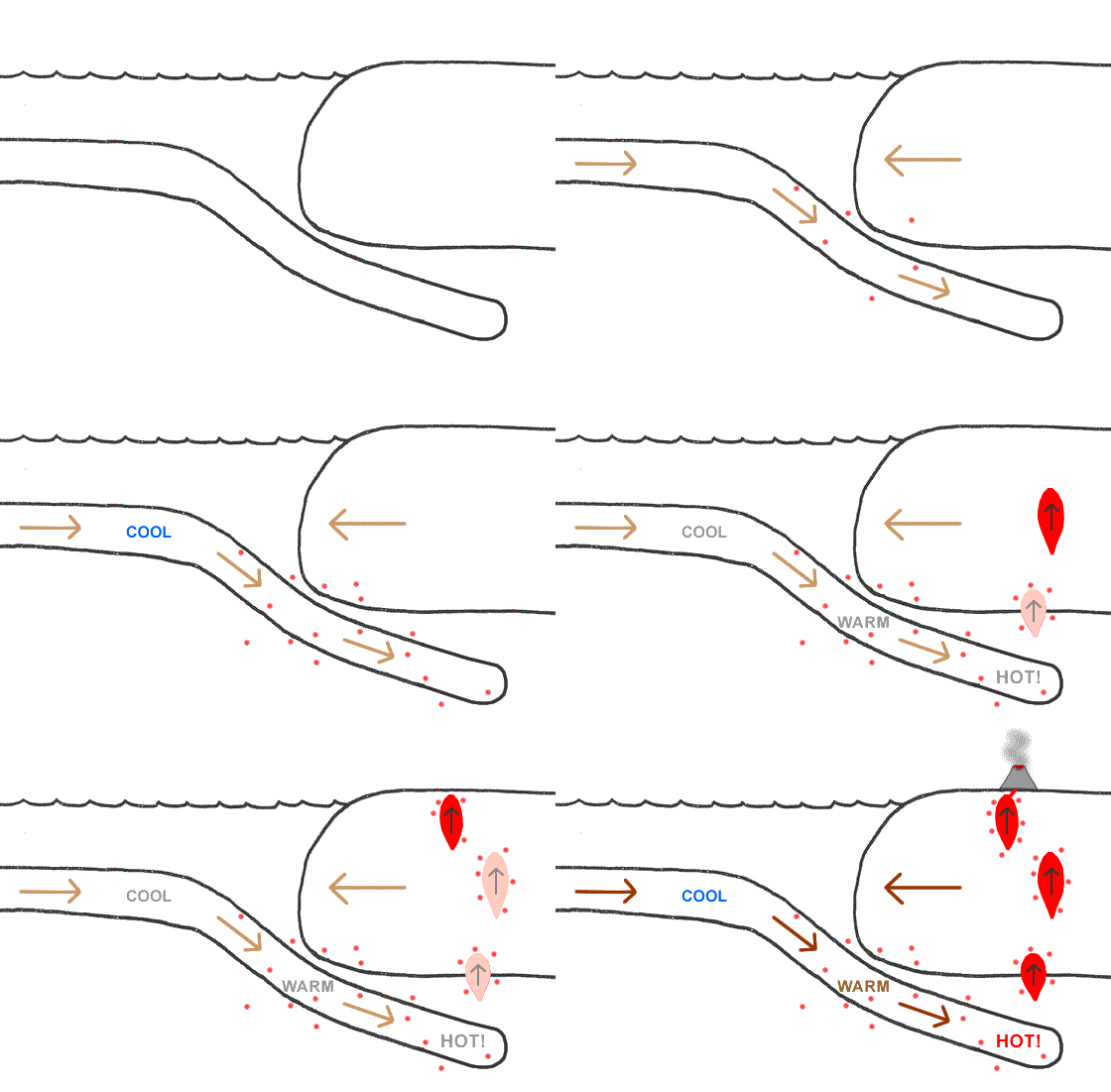
Convergent Plate Boundary - Oceanic and Continental Plates:
(see illustration above) When continental and oceanic plates
collide the thinner and more dense oceanic plate is overridden
by the thicker and less dense continental plate. The oceanic
plate is forced down into the mantle in a process known
as "subduction". As the oceanic plate descends
it is forced into higher temperature environments. At a
depth of about 100 miles (160 km) materials in the subducting
plate begin to approach their melting temperatures and a
process of partial melting begins.
This partial melting produces magma chambers above the subducting
oceanic plate. These magma chambers are less dense than
the surrounding mantle materials and are buoyant. The buoyant
magma chambers begin a slow asscent through the overlying
materials, melting and fracturing their way upwards. The
size and depth of these magma chambers can be determined
by mapping the earthquake activity arround them. If a magma
chamber rises to the surface without solidifying the magma
will break through in the form of a volcanic eruption.
The Washington-Oregon coastline of the United States is
an example of this type of convergent plate boundary. Here
the Juan de Fuca oceanic plate is subducting beneath the
westward moving North American continental plate. The Cascade
Mountain Range is a line of volcanoes above the melting
oceanic plate. The Andes Mountain Range of western South
America is another example of a convergent boundary between
an oceanic and continental plate. Here the Nazca Plate is
subducting beneath the South American plate.
Visit the Interactive
Plate Boundary Map to explore satellite images of convergent
boundaries between oceanic and continental plates. Two locations
are marked to show this type of plate boundary - the Cascade
volcanoes along the Washington-Oregon coast of North America
and the Andes mountain range on the western margin of South
America.
Effects of a convergent boundary between an oceanic and
continental plate include: a zone of earthquake activity
that is shallow along the continent margin but deepens beneath
the continent, sometimes an ocean trench immediately off
shore of the continent, a line of volcanic eruptions a few
hundred miles inland from the shoreline, destruction of
oceanic lithosphere.

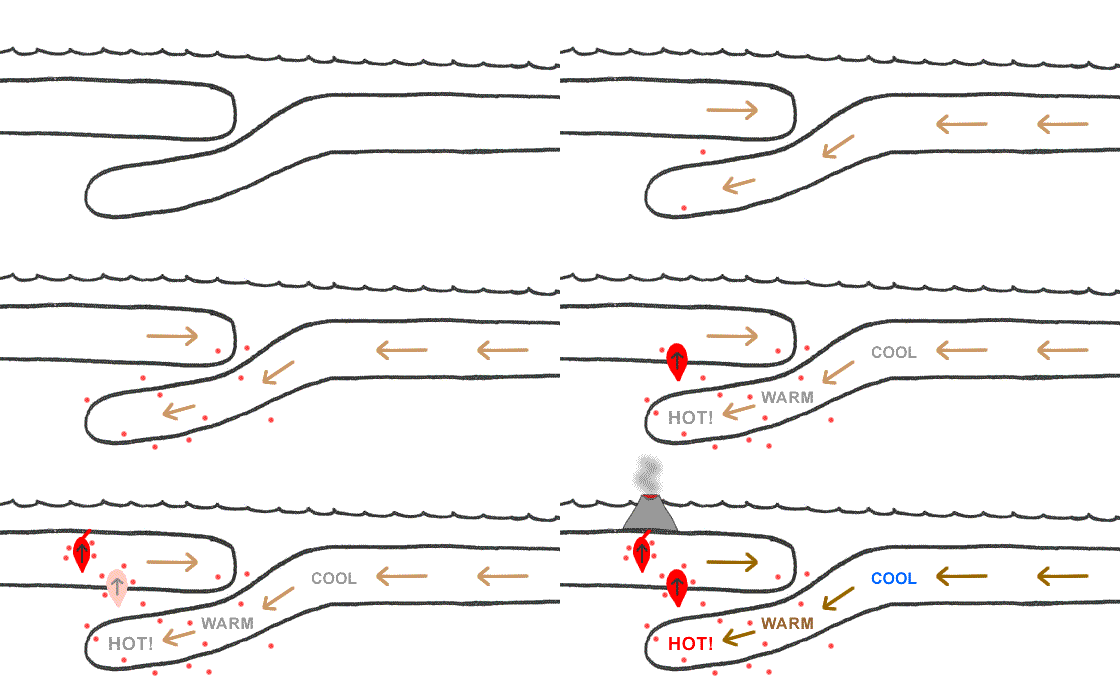
Convergent Plate Boundary - Oceanic: (See Illustration
above.) When a convergent boundary occurs between two oceanic
plates one of those plates will subduct beneath the other.
Normally the older plate will subduct because of its higher
density. The subducting plate is heated as it is forced
deeper into the mantle and at a depth of about 100 miles
(150 km) the plate begins to melt. Magma chambers are produced
as a result of this melting and the magma is lower in density
than the surrounding rock material. It begins ascending
by melting and fracturing its way throught the overlying
rock material. Magma chambers that reach the surface break
through to form a volcanic eruption cone. In the early stages
of this type of boundary the cones will be deep beneath
the ocean surface but later grow to be higher than sea level.
This produces an island chain. With continued development
the islands grow larger, merge and an elongate landmass
is created.
Japan, the Aleutian islands and the Eastern Caribbean islands
of Martinique, St. Lucia and St. Vincent and the Grenadines
are examples of islands formed through this type of plate
boundary. Visit the Interactive
Plate Boundary Map to explore satellite images of these
three areas.
Effects that are found at this type of plate boundary include:
a zone of progressively deeper earthquakes, an oceanic trench,
a chain of volcanic islands, and the destruction of oceanic
lithosphere.

Convergent Plate Boundary - Continental: (see illustration
above) This is a difficult boundary to draw. First it is
complex and second, it is poorly understood when compared
to the other types of plate boundaries. In this type of
convergent boundary a powerful collision occurs. The two
thick continental plates collide and both of them have a
density that is much lower than the mantle, which prevents
subduction (there may be a small amout of subduction or
the heavier lithosphere below the continental crust might
break free from the crust and subduct).
Fragments of crust or continent margin sediments might be
caught in the collision zone between the continents forming
a highly deformed melange of rock. The intense compression
can also cause extensive folding and faulting of rocks within
the two colliding plates. This deformation can extend hundreds
of miles into the plate interior.
The Himalaya Mountain Range is the best active example of
this type of plate boundary. Visit the Interactive
Plate Boundary Map to explore satellite images of the
Himalaya Range where the Indian and Eurasian plates are
currently in collision. The Appalachian Mountain Range is
an ancient example of this collision type and is also marked
on the map.
Effects found at a convergent boundary between continental
plates include: intense folding and faulting, a broad folded
mountain range, shallow earthquake activity, shortening
and thickening of the plates within the collision zone.
|
|